
Why creativity cannot be hacked, only practiced
What I learnt and what the sience says about being a victim for optimisation.

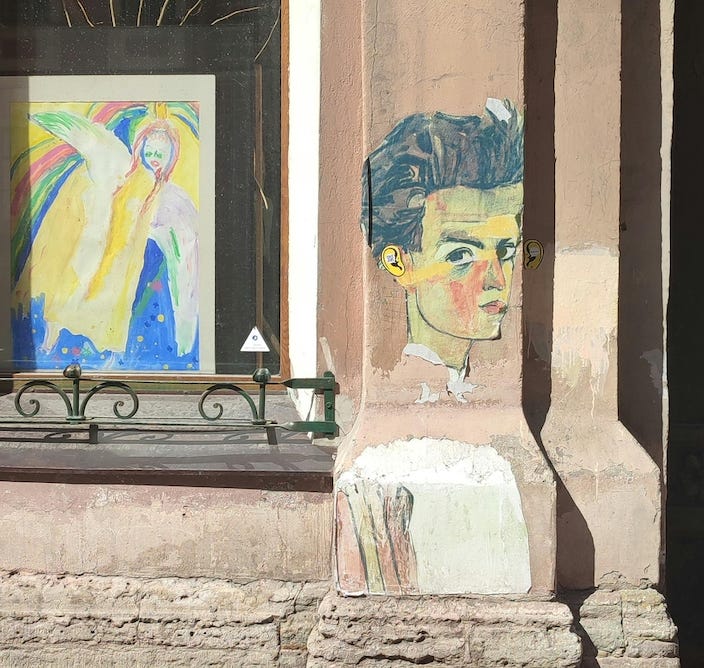
I have been a victim for optimisation. The more efficient something is, the better. The less time I waste on not producing the better because the more I run the faster I will get there.
We search for the perfect morning routine, the right playlist, or the exact brain-training game that will unlock our genius. New apps to track performance, productivity and optimisation.
We are constantly sold the idea that our minds are machines, like a software that can be upgraded, debugged, and “hacked” for maximum output.
And when it comes to creativity we gone so far that we want to believe that if we just input fun, we will output art. I tried it and it didn’t work.
So I looked into what the research says on creativity and this is what I found…
you cannot force the spark.
Researchers recently attempted to measure how specific activities influence our ability to think creatively. They gathered over 800 people and divided them into rooms of digital distraction and mental effort.
Some played a “fun” bubble-shooter game, designed to be recreational and loose. Others played a math game, or solved dry arithmetic problems, intended to induce focus. A final group did nothing at all.
The hypothesis was simple and seductive: the fun games would loosen the mind, creating an effect of joy that would lead to divergent thinking the ability to generate many varied ideas. The focused math tasks were expected to sharpen convergent thinking, the ability to find the single correct solution.
They measured the results.
They looked for the boost, the hack, the trigger.
They found nothing.
Contrary to the predictions, playing a game did not make people more creative. Doing math did not make them significantly sharper at finding connections. The “joyful” task did not inherently produce better art than the “neutral” task.
So in the world of science, this is a failure to reject the null hypothesis. But in the language of being, this is a revelation.
It suggests that our creativity is not so fragile that it is determined by the three minutes we spend popping digital bubbles. It suggests that the human mind is not a simple input-output machine where fun game = good Ideas.
As Sherry Ning put it, “You are an appetite”. You are a body of directional hunger, not a passive vessel waiting to be activated by a smartphone game.
If the external “hack” doesn’t work, what does?
While the game itself didn’t matter, the person playing it did. The study found that creative self-efficacy, the simple, sturdy belief that you can be creative, was positively associated with the ability to generate ideas.
Those with a growth mindset, who believed creativity could be cultivated through effort rather than being a fixed trait showed better performance.
This aligns with the ancient understanding of relegere (religion/practice): to go over again, to carefully observe.
Creativity is not a lightning bolt summoned by a distraction; it is a repeated discipline of paying attention.
It turns out that confidence is not built by being entertained.
It is built by the practice of showing up.
And then the big danger… the loss of attention. For older participants, doing dry arithmetic tasks actually reduced the originality of their ideas. The cognitive load, the sheer effort of grinding through calculations, takes away the resources needed to dream.
Attention is costly. Perhaps the most expensive asset you own.
It is an economic exchange.
When we spend our mental currency on “fast content” or rote tasks, we become “spiritually malnourished”. We cannot expect to output beauty when we are exhausting our mechanisms of focus on things that do not matter.
So, where does this leave us?
No point of return?
It leaves us with the control group. The people who did nothing. The people who were not entertained, not challenged, not stimulated. They performed just as well as the gamers.
There is a lesson here about the “fear of the blank canvas”. We try to fill the silence with games and inputs because we are afraid that without them, we are empty. We fear that if we are not constantly stimulated, we will rot. And there is no purpose to our existence if we are not constantly producing or to be frank today its more consuming.
But here is one important message to you:
Your brain isn’t broken... Unrot it. Reclaim it. Wake it back up. Now.
We do not need a bubble-shooter game to be creative. We need to stop looking for the switch and start trusting the vessel.
Creativity is a way of being in the world.
It is the decision to look up. It is the refusal to let attention scatter. It is the understanding that “what you look at is what you worship, what you worship is what you become”.
So, close the game. Put down the phone. Stop looking for the hack that will make you an artist in three minutes.
Trust your own discernment.
As Sydney Rheeder notes, “Taste is self-trust”. It is the confidence built not by being liked, or by being entertained, but by liking what you like.
The science says the shortcut doesn’t work.
The soul says the long way is the only way.
You are not here to be optimised.
You are here to pay attention.
What science says….
• Haase, J., & Hanel, P. H. P. (2025). “Spillover Effects in Creative Thinking: The Impact of Gaming and Mathematics on Creativity and Emotions.” Creativity Research Journal, 37(4).
◦ Source for: The study on games failing to improve creativity and the “cognitive fatigue effect.”
• Hewitt, F. “The Art of Constant Correction.” New Zealand Management.
◦ Source for: Neuroplasticity, compound interest in habits, and the concept of “constant correction.”
• Ning, S. (Oct 02, 2025). “Attention Shapes Being and Belief.” Substack.
◦ Source for: “You are an appetite,” the etymology of religion (relegere), and “what you look at is what you worship.”
• Rheeder, S. (Nov 03, 2025). “The Power of Knowing What You Like.” For the Record.
◦ Source for: Taste as “self-trust” and the “inner compass.”
• Siegle, D. (2025). “Using AI to Foster Creativity: Removing the Fear of the Blank Canvas.” Gifted Child Today.
◦ Source for: Using tools to overcome perfectionism and the mantra “Just make it EXIST first.”
• Terry, M. “Evolutio: Students are introduced to pre-Darwinian biological thought via 17th-century paintings.” The Science Teacher.
◦ Source for: The example of naturalist Maria Sybilla Merian and observational drawing.
An insightful and challenging read as a “professional” creative.
💡 Attention and discipline being essential to sustainable creativity.
Love this read! Reminds me of Rick Rubin's philosophy "the real work of the artist is a way of being in the world"